

Choosing between Basic First Aid and Intermediate First Aid in Ontario is primarily determined by how many people are working on a shift. For workplaces with five or fewer people working on any one shift, at least one person must hold a Basic First Aid certificate. When six or more people are working on a shift, at least one person must hold an Intermediate First Aid certificate.
The physical size of your workplace is not what determines which course is required. A large warehouse with only four employees working on a shift may require Basic First Aid, while a small office with eight employees working at the same time requires Intermediate First Aid. The same principle applies to work crews, off-site teams and other groups of employees working together.
Basic First Aid and Intermediate First Aid were previously known as Emergency First Aid and Standard First Aid. Ontario introduced the updated course names on June 22, 2026, as part of broader changes to workplace first aid requirements. If you’re unfamiliar with those changes, our guide Ontario First Aid Rules Changed: Are You Still Compliant? explains what changed and what employers need to know.
This guide focuses specifically on helping employers determine which level of first aid training their workplace needs, how Basic and Intermediate First Aid differ, what each course involves and what to consider when planning future employee training.
Quick Summary
For most Ontario employers, choosing the correct workplace first aid course starts with the number of people working on each shift:
The main difference between Basic and Intermediate First Aid is the depth of training and the number of workers the certification is intended to support under Ontario’s workplace first aid requirements. The comparison below provides a quick overview before we explore each requirement in more detail.
| Basic First Aid | Intermediate First Aid | |
| Required when | 5 or fewer people work on a shift | 6 or more people work on a shift |
| Previous name | Emergency First Aid | Standard First Aid |
| Primary focus | Immediate and potentially life-threatening emergencies | Basic First Aid topics plus a broader range of injuries and medical emergencies |
| WSIB course length | 8 hours | 16 hours |
| Certification validity | 3 years | 3 years |
| Recertification | Full course required every 3 years | Eligible learners may recertify once before completing the full course again |
| Typical situations | Lone workers, very small businesses and crews of 5 or fewer workers per shift | Offices, factories and crews with 6 or more workers per shift |

If five or fewer people are working on any one shift, at least one person must hold a Basic First Aid certificate. If six or more people are working on a shift, at least one person must hold an Intermediate First Aid certificate. This is the key distinction Ontario employers need to understand when choosing workplace first aid training.
The requirement is based on the number of people working at that time, not the physical size of the building or worksite.
For example:
Employers should therefore look at how their workforce is actually organized rather than simply counting everyone employed by the company. Different shifts, crews and work locations may need to be considered individually when determining the appropriate training level.
Workplace first aid compliance also includes requirements for appropriate first aid kits and supplies. For help determining which kit your workplace requires, see our guide Do You Need a CSA First Aid Kit in Ontario?
Basic First Aid prepares participants to respond to immediate emergencies where prompt first aid can make a critical difference while waiting for emergency medical services. Intermediate First Aid includes those same foundational skills while expanding training to cover a broader range of injuries, illnesses and workplace emergencies.
Basic First Aid is designed to give participants the skills needed to recognize an emergency, activate emergency medical services when required and provide immediate care until additional help arrives. The course places particular emphasis on situations where delaying first aid could significantly affect the outcome.
Intermediate First Aid builds on that foundation. In addition to the topics covered in Basic First Aid, participants learn how to respond to a wider range of injuries and medical situations, which may include:
The distinction is therefore not simply that one course is “basic” and the other is “advanced.” The appropriate course is determined first by Ontario’s workplace training requirements, while the additional Intermediate First Aid content provides employees with broader knowledge for responding to the types of injuries and emergencies that may occur in larger workplaces.
Compliance Tip
If you’re unsure which course your employees require, start with the number of workers on each shift. Industry, off-site crews, company vehicles and whether children are regularly present can then help determine any additional first aid or CPR training considerations.
WSIB describes Basic First Aid as an 8-hour program and Intermediate First Aid as a 16-hour program. The amount of classroom and online learning involved can vary depending on the CPR level included and whether the course is delivered through traditional classroom instruction or blended learning.
Durham First Aid offers Canadian Red Cross first aid programs. Red Cross program standards set minimum teaching times for each course configuration, which means the scheduled learning time may differ depending on the first aid course, CPR level and delivery method selected.
| Canadian Red Cross Course | Traditional Classroom | Blended Learning |
| Basic First Aid with CPR A | 6.5 hours teaching time | 4 hours online + 4 hours in class |
| Basic First Aid with CPR C | 7 hours teaching time | 4 hours online + 5 hours in class |
| Intermediate First Aid with CPR A | 13 hours teaching time | 8 hours online + 7 hours in class |
| Intermediate First Aid with CPR C | 14 hours teaching time | 8 hours online + 7.5 hours in class |
With traditional training, participants complete the required instruction in the classroom. Blended learning combines a self-directed online component with required in-class training.
Choosing blended learning does not eliminate required course content. Instead, it changes how the training is delivered, with participants completing part of the program online before attending the classroom portion for hands-on learning, skills practice and assessment.
For employers, blended training can provide additional scheduling flexibility while ensuring employees complete the required components of their Canadian Red Cross first aid program.
Basic First Aid and Intermediate First Aid certifications are valid for three years, but the recertification requirements are different. Basic First Aid cannot be recertified in Ontario, while eligible Intermediate First Aid certificate holders can complete a recertification course once before they are required to take the full course again.
No. When a Basic First Aid certificate reaches the end of its three-year certification period, the employee must complete the full Basic First Aid course again to receive a new certification.
Employers should therefore monitor certification expiry dates and schedule employees for a new course before their existing certification expires.
Yes. An employee with a valid Intermediate First Aid certificate can recertify once by completing the required Intermediate First Aid Recertification course before the existing certification expires. After that recertification cycle, the employee must return to the full Intermediate First Aid course.
A typical certification cycle would look like this:
| Year | Training |
| 2026 | Full Intermediate First Aid course |
| 2029 | Intermediate First Aid recertification |
| 2032 | Full Intermediate First Aid course |
The cycle can then begin again, provided the employee continues to meet the applicable recertification requirements.
Compliance Tip
Don’t wait until an employee’s certification has expired to arrange Intermediate First Aid recertification. The recertification course must be completed while the existing certification is still valid. Tracking certification dates in advance can help employers avoid gaps in their workplace first aid coverage.
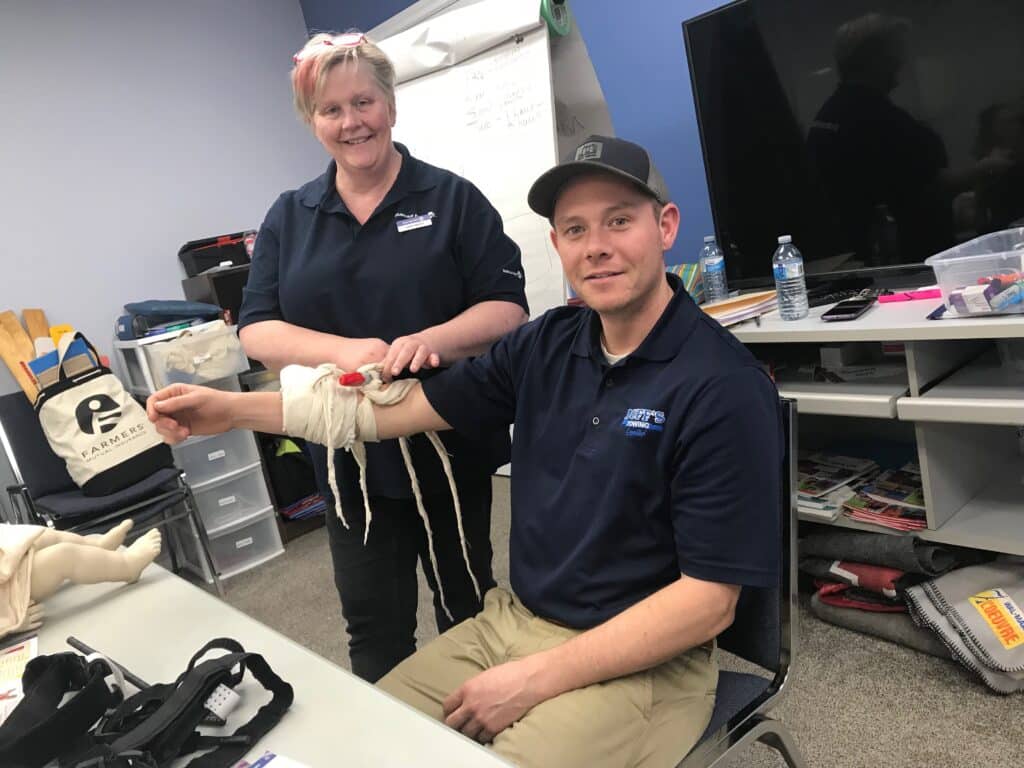
The appropriate CPR level depends on who employees may need to assist and the type of environment in which they work. CPR A focuses on adults, CPR C includes adults, children and babies, while Basic Life Support (BLS) is intended for healthcare and other professional responders who may use additional resuscitation equipment.
CPR A teaches participants how to respond to cardiac and breathing emergencies involving adults. Certification is valid for three years.
For workplaces where employees would primarily be expected to provide first aid to other adults, CPR A may meet their training needs when paired with the appropriate first aid course.
CPR C expands the training to include CPR skills for adults, children and babies. Certification is also valid for three years.
Employers should pay particular attention to CPR level when children are regularly present in their workplace. Daycares, indoor play facilities and other businesses or organizations serving children may need CPR C rather than training that addresses adults alone.
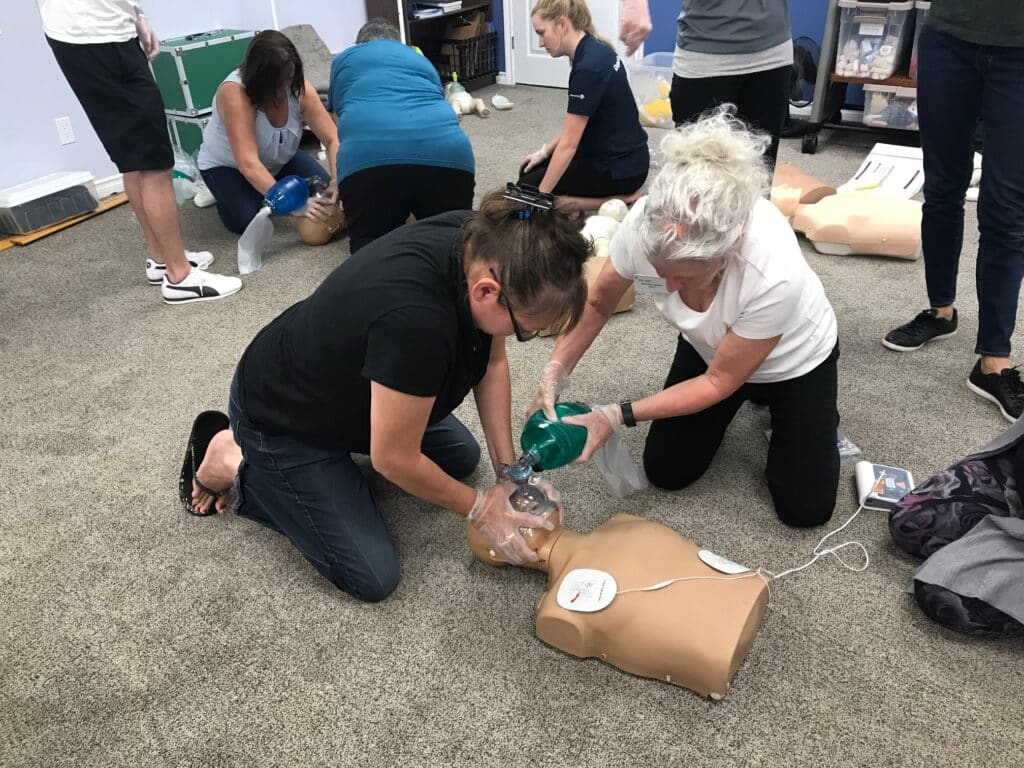
Basic Life Support provides a higher level of CPR training for healthcare providers and professional responders who may work with additional resuscitation equipment, such as a bag-valve mask (BVM).
BLS may be required for professionals such as paramedics, nurses, dental hygienists, firefighters and patient-transfer personnel. Some personal support workers may also require BLS depending on their employer and workplace responsibilities.
Because CPR requirements can vary according to industry, workplace and employee responsibilities, employers should confirm the appropriate CPR level rather than automatically selecting a course based solely on its first aid classification.
Ontario’s updated workplace first aid requirements introduced new names for Basic and Intermediate First Aid and updated some of the material taught in the courses. As of June 22, 2026, Emergency First Aid is known as Basic First Aid, while Standard First Aid is known as Intermediate First Aid.
For employers familiar with the previous terminology:
| Previous Course Name | Current Course Name |
| Emergency First Aid | Basic First Aid |
| Standard First Aid | Intermediate First Aid |
The changes went beyond course names. Canadian Red Cross first aid programs were also updated to reflect current standards, terminology and first aid practices.
Some of the updates include:
Employees who already held valid Emergency or Standard First Aid certificates when Ontario’s requirements changed do not automatically need to retrain simply because the course names changed. Existing certificates remain valid until their expiry date.
For a broader explanation of the June 2026 changes and how they affect Ontario employers, see Ontario First Aid Rules Changed: Are You Still Compliant?
If the number of people working on a shift increases from five or fewer to six or more, your workplace will require Intermediate First Aid rather than Basic First Aid coverage. Employers expecting their workforce or individual crews to grow should consider this when planning employee training.
For example, a construction company may currently have a five-person crew. At that staffing level, at least one person with Basic First Aid certification meets the applicable training threshold. If another employee joins the crew and six people are now working together, at least one person must have Intermediate First Aid certification.
The same principle can apply when:
This is why employers should consider not only their current staffing levels but also foreseeable changes to their workforce.
There is no upgrade course that converts a Basic First Aid certification into an Intermediate First Aid certification. If an employee has Basic First Aid and the workplace subsequently requires Intermediate First Aid, the employee will need to complete the full Intermediate First Aid course.
For a business that expects to move beyond the five-worker threshold in the near future, choosing Intermediate First Aid training from the outset may avoid having to train an employee twice.
Compliance Tip
Include first aid requirements when planning for staffing growth. Hiring one additional employee may seem like a small operational change, but moving from five to six people on a shift changes the level of first aid training required.
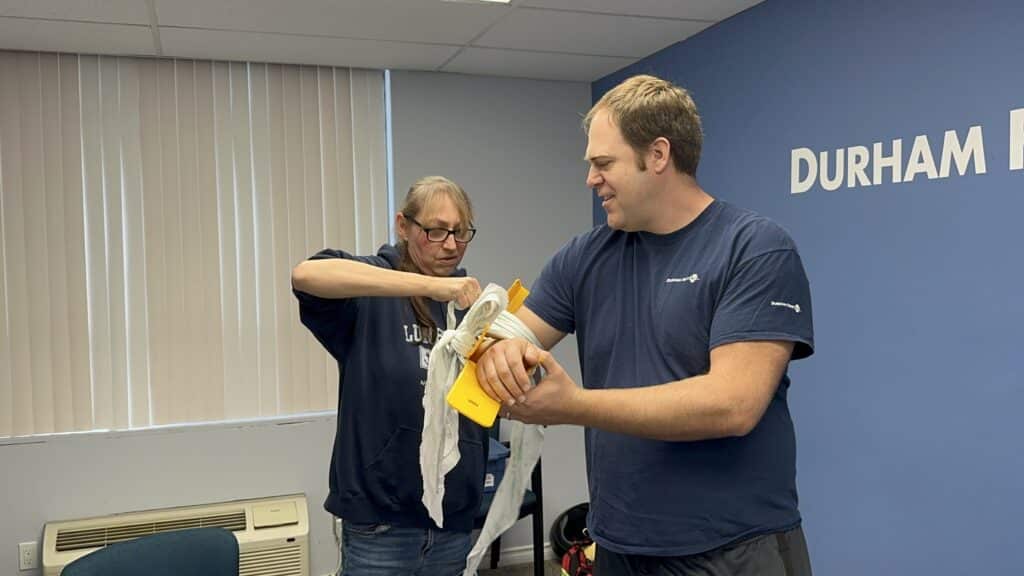
Choosing between Basic and Intermediate First Aid starts with understanding how many people are working on each shift, but other workplace circumstances can also affect your overall training needs. Durham First Aid Inc. can help employers review their workplace and determine the appropriate first aid and CPR training for their employees.
When an employer contacts Durham First Aid for guidance, some of the first questions we ask are:
These questions help identify not only whether Basic or Intermediate First Aid is required, but also whether factors such as off-site work or the appropriate CPR level need to be considered.
Durham First Aid provides Basic First Aid, Intermediate First Aid and CPR training to help employers in Durham Region meet their workplace first aid requirements with confidence.
Not sure which course your employees need? Contact Durham First Aid for guidance or register your employees for the appropriate workplace first aid training.
If five or fewer people are working on any one shift, at least one person must have Basic First Aid certification. If six or more people are working on a shift, at least one person must have Intermediate First Aid certification.
Yes. As of June 22, 2026, Emergency First Aid is known as Basic First Aid in Ontario. Standard First Aid is now known as Intermediate First Aid. Existing valid certificates issued under the previous course names remain valid until they expire.
Both Basic First Aid and Intermediate First Aid certifications are valid for three years. Basic First Aid requires completion of the full course again, while eligible Intermediate First Aid certificate holders may recertify once before completing the full course during the following certification cycle.
No. There is no upgrade course from Basic First Aid to Intermediate First Aid. If your workplace grows and Intermediate First Aid is required, an employee with Basic First Aid will need to complete the full Intermediate First Aid course.
No. The physical size of your workplace does not determine whether Basic or Intermediate First Aid is required. The requirement is based on the number of people working on a shift.
The appropriate CPR level depends on the workplace and who employees may need to assist. CPR A focuses on adults, CPR C includes adults, children and babies, and Basic Life Support (BLS) is intended for healthcare providers and other professional responders who may use additional resuscitation equipment.