

A workplace first aid program is more than a stocked first aid kit and an employee with a valid certificate. Ontario employers need a practical plan that ensures trained first aiders, appropriate supplies and clear procedures are in place when an injury or medical emergency occurs.
For businesses covered by Ontario’s Workplace Safety and Insurance Act (WSIA), Regulation 1101 establishes workplace first aid requirements. Depending on the industry, additional professional or regulatory standards may also apply.
However, meeting these requirements is only part of the process. Employers also need to decide who will be responsible for first aid, where supplies will be located, how training records will be maintained and when the program should be reviewed.
Whether you’re establishing a workplace first aid program for the first time or reviewing an existing one, this guide walks you through five practical steps to help organize your training, equipment, documentation and ongoing responsibilities.
Quick Summary
Building a workplace first aid program involves five essential steps: Assess, Train, Equip, Document and Maintain. Ontario employers need to identify applicable first aid requirements, train designated employees, provide accessible supplies, establish clear responsibilities and maintain accurate records. Regular inspections and program reviews help ensure first aid assistance remains available as workplace conditions change.
A workplace first aid program should bring together employee training, accessible first aid supplies, clearly assigned responsibilities, proper documentation and ongoing maintenance. Each component supports the others and helps ensure that first aid assistance is available when employees need it.
For example, having trained employees is important, but their training is less useful if other workers do not know who the designated first aiders are or where to find first aid supplies. Similarly, a well-stocked first aid kit cannot provide effective support if it is locked away or no one is responsible for checking its contents.
A practical workplace first aid program can be organized into five steps:
| Step | What Employers Need to Do |
| 1. Assess | Identify applicable first aid requirements based on workplace staffing, industry and working conditions. |
| 2. Train | Select appropriate first aid courses and designate enough trained employees to maintain coverage. |
| 3. Equip | Provide suitable first aid supplies and ensure they are accessible throughout the workplace. |
| 4. Document | Assign responsibilities, maintain certification records and establish first aid reporting procedures. |
| 5. Maintain | Inspect supplies, monitor certification expiry dates and update the program when workplace conditions change. |
These steps can help employers establish a new program or identify areas of an existing program that need improvement.
The following sections explain how to put each step into practice.
Start by identifying which first aid requirements apply to your workplace, including the number of employees working on each shift and any additional industry-specific obligations.
For workplaces covered by Ontario’s WSIA, the level of first aid training required under Regulation 1101 depends on how many people are working on a shift.
These are the minimum training levels under the general workplace first aid requirements. Employers should also consider how employees are distributed across shifts, departments and work locations when planning their program.
For a detailed explanation of Ontario’s updated training requirements, see Ontario First Aid Rules Changed: Are You Still Compliant?
Yes. Some industries and regulated professions have additional first aid or CPR training requirements beyond Ontario’s general workplace first aid requirements. Employers need to identify these obligations before selecting training for their employees.
Depending on the occupation, additional requirements may be established by government ministries, professional regulatory colleges, licensing bodies or industry standards.
For example, employees working in childcare, healthcare, security or school transportation may need specific first aid or CPR qualifications related to their responsibilities. The required certification can vary by occupation and governing organization.
Compliance Tip
Before registering employees for first aid training courses, check whether your industry or professional regulatory body requires a specific certification. Meeting Ontario’s general workplace first aid requirements does not necessarily satisfy additional occupational obligations.

Employers should select the appropriate first aid training for their workplace and designate enough certified employees to maintain coverage during working hours. This includes planning for different shifts, employee absences and changes in staffing.
Start by identifying which employees will be responsible for providing first aid assistance. These individuals should receive training that meets the applicable workplace requirements and understand their responsibilities.
While Basic First Aid may satisfy the minimum training requirement for smaller workplaces, employers can choose to provide more comprehensive training.
For example, Intermediate First Aid with CPR/AED Level C covers a broader range of first aid skills and includes CPR techniques for adults, children and infants. This may be a worthwhile option for businesses that want employees to develop additional emergency response skills.
However, the appropriate course should be selected based on workplace requirements, employee responsibilities and any additional industry-specific obligations.
For a detailed comparison of certification levels, see Basic vs. Intermediate First Aid: Which Course Do You Need?
Yes. Training additional employees can help maintain first aid coverage when designated first aiders are absent, unavailable or no longer employed by the company.
Although Ontario’s workplace first aid requirements establish minimum training levels, employers also need to consider whether a trained first aider will be available when assistance is needed.
For example, relying on one certified employee may create a coverage gap when that person is on vacation, calls in sick or is not on-site during their shift.
Employers should also review first aid responsibilities when hiring new employees, changing work schedules or transferring staff between locations.
If a designated first aider is leaving the company, arranging replacement training before their departure can help prevent an interruption in first aid coverage.
For more guidance on staffing and coverage, see How Many Certified First Aiders Does Your Workplace Need?
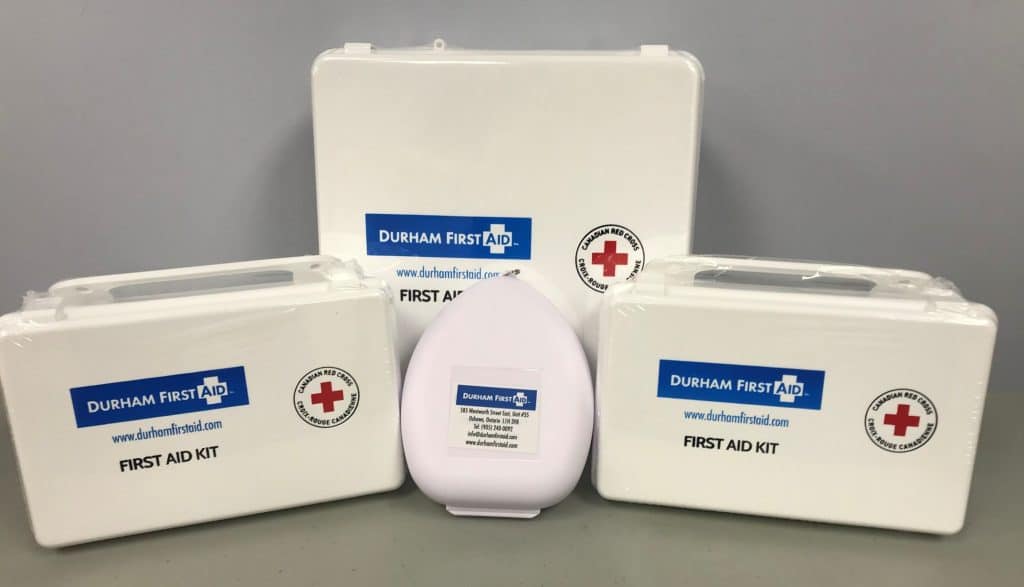
Employers need to provide appropriate first aid supplies and ensure employees can access them quickly when an injury or medical emergency occurs. Selecting the right equipment is important, but its location, visibility and accessibility are equally important.
The type and quantity of first aid supplies required depend on factors such as the number of employees, workplace conditions and the applicable first aid regulations.
Ontario workplaces covered by WSIB must meet the first aid supply requirements under Regulation 1101. Employers can use supplies that meet the applicable requirements of the regulation or qualifying CSA Z1220 first aid kits.
CSA first aid kits are available in different types and sizes to accommodate workplace needs. For example, Type 1 kits are designed for individual use, while Type 2 and Type 3 kits provide different levels of supplies for workplace first aid situations.
Employers should select their kits based on the applicable requirements rather than assuming that one standard kit is suitable for every workplace.
For a detailed explanation of kit types, sizes and selection, see Do You Need a CSA First Aid Kit in Ontario?
First aid kits should be clearly identified, easy to locate and readily accessible to employees during working hours. Supplies should not be stored in locked offices, inaccessible cabinets or locations that could delay assistance.
Suitable locations may include designated first aid areas, accessible break rooms or visible wall-mounted stations.
When deciding where to position supplies, employers should consider the workplace layout and how employees move between departments.
For example, a business operating across several floors or in a large facility may benefit from having multiple first aid kits rather than relying on one central location.
Employees should also know where the kits are located and who is responsible for providing first aid assistance.
An automated external defibrillator (AED) can be a valuable addition to a workplace first aid program because it provides potentially lifesaving assistance during a sudden cardiac arrest. Whether an AED is legally required depends on the workplace and any applicable legislation.
AEDs are designed to assess a person’s heart rhythm and provide instructions to the person using the device. They can be used alongside CPR while emergency medical services are on their way.
Employers considering an AED should think about where it will be located, how employees will access it and who will be responsible for maintaining it.
An AED should be placed in a visible, accessible location. Employees should know where to find it, and designated staff should understand how to follow the device’s instructions and the workplace’s emergency procedures.
AED maintenance is also important. Employers should follow the manufacturer’s recommendations for checking the device, battery and electrode pads to help ensure it is ready for use.
Certain Ontario workplaces may be subject to additional AED requirements. Employers should confirm whether any specific obligations apply to their operations before establishing their equipment and maintenance procedures.

A workplace first aid program needs clearly assigned responsibilities and organized records so employees know who provides assistance, where supplies are located and how incidents are documented. These procedures help employers maintain an effective program as staffing and workplace conditions change.
Designated first aiders should understand their responsibilities beyond responding to injuries. Depending on how the workplace organizes its program, these may include:
Employers should also identify who is responsible for overseeing the program. This may be a supervisor, health and safety representative or another designated employee.
Employers should maintain current first aid certification records, identify designated first aiders and document workplace incidents requiring first aid. Organized records make it easier to monitor training, maintain coverage and review the program when necessary.
Important records and information include:
Employers should also make sure employees know where to find information about designated first aiders and workplace first aid procedures.
Records should be kept organized and accessible to authorized personnel while protecting the privacy of employees involved in workplace incidents.
Employers should regularly review their workplace first aid program to ensure trained first aiders remain available, supplies are properly maintained and procedures continue to meet workplace needs. A program that meets requirements today may need adjustments as employees, schedules and working conditions change.
A practical review process should include:
Employers may find it helpful to assign one person the responsibility for coordinating these reviews and maintaining a record of completed inspections.
A workplace first aid program should be reviewed whenever staffing, work activities or workplace conditions change in ways that could affect first aid coverage or emergency response.
For example, hiring additional employees may change the level of first aid training required on a shift. Introducing a new shift, expanding into another building or relocating employees may also affect where first aiders and supplies are needed.
Employers should reassess their program when:
A workplace first aid program should evolve alongside the business. Regular reviews help ensure that the people, equipment and procedures employees rely on remain ready when needed.
Missing documentation, expired certifications, neglected first aid supplies and unclear responsibilities are warning signs that a workplace first aid program may need attention. Identifying these issues early gives employers an opportunity to make improvements before an emergency occurs.
Some common warning signs include:
These warning signs do not necessarily mean the entire program needs to be rebuilt. In many cases, reviewing records, replacing or replenishing supplies, updating responsibilities or arranging training can address the problem.
Use this checklist to review whether the essential elements of your workplace first aid program are in place. It can help employers, HR managers and health and safety leaders identify areas that may need attention.
| Program Area | What to Check | Complete |
| Assess | Have we identified the first aid requirements that apply to our workplace, including any industry-specific obligations? | ☐ |
| Train | Do we have appropriately certified first aiders available for our shifts and work locations? | ☐ |
| Equip | Are suitable first aid supplies provided, clearly identified and readily accessible? | ☐ |
| Document | Are first aid responsibilities assigned, certification records current and incident reporting procedures established? | ☐ |
| Maintain | Are supplies inspected, certification renewals planned and the program reviewed when workplace conditions change? | ☐ |
If you cannot confidently check an item, review that part of your program and identify what needs to be updated.
Completing this checklist is a useful starting point, but it does not replace an assessment of your workplace’s specific legal and industry requirements.
Need a more detailed review? Download Durham First Aid’s Workplace First Aid Program Checklist to assess your training, supplies, documentation and maintenance procedures, with space to record follow-up actions.
Download Workplace First Aid Program Checklist
Building an effective workplace first aid program begins with understanding your requirements and ensuring the right people, equipment and procedures are in place. Whether you’re starting from scratch or updating an existing program, taking a structured approach can help you maintain a safer, better-prepared workplace.
Durham First Aid Inc., a Canadian Red Cross Training Partner, offers workplace first aid training and CPR/AED courses to help Ontario employers train designated first aiders and maintain current certifications.
Explore our First Aid and CPR Training Courses to find the appropriate training for your employees and take the next step towards a well-organized workplace first aid program.
The employer is responsible for ensuring that applicable workplace first aid requirements are met. Specific duties, such as monitoring supplies, tracking certifications and coordinating training, can be assigned to supervisors, health and safety representatives or designated employees. However, assigning these tasks does not remove the employer’s overall responsibility.
For workplaces covered by WSIB requirements, employers are responsible for the cost of required first aid training for designated first aiders. Employees must also be paid for the time spent completing employer-required first aid training. Employers should distinguish workplace training obligations from qualifications an applicant may need before being hired.
A workplace first aid program should be reviewed regularly and whenever changes in staffing, shifts, work locations or activities could affect first aid coverage. Monthly kit inspections and periodic certification reviews are practical recommendations, although not every review activity has a prescribed monthly legal schedule.
An expired first aid certificate is no longer valid for meeting Ontario’s workplace first aid training requirements. If the employer does not have another appropriately certified first aider available to maintain the required coverage, the workplace is not compliant with those requirements. Employers should arrange the necessary training or recertification promptly and track certification expiry dates to prevent gaps in compliance.
Small businesses covered by Ontario’s workplace first aid requirements must meet the obligations that apply to their operations, even if they have only a few employees. A practical program does not necessarily require extensive documentation, but it should establish appropriate training, accessible supplies, clear responsibilities and procedures for providing first aid.
An employer can use a consistent first aid program framework across multiple locations, but each workplace must have appropriate first aid arrangements for its staffing, layout, activities and applicable requirements. Training coverage, equipment accessibility and designated responsibilities should be assessed separately for each location.